

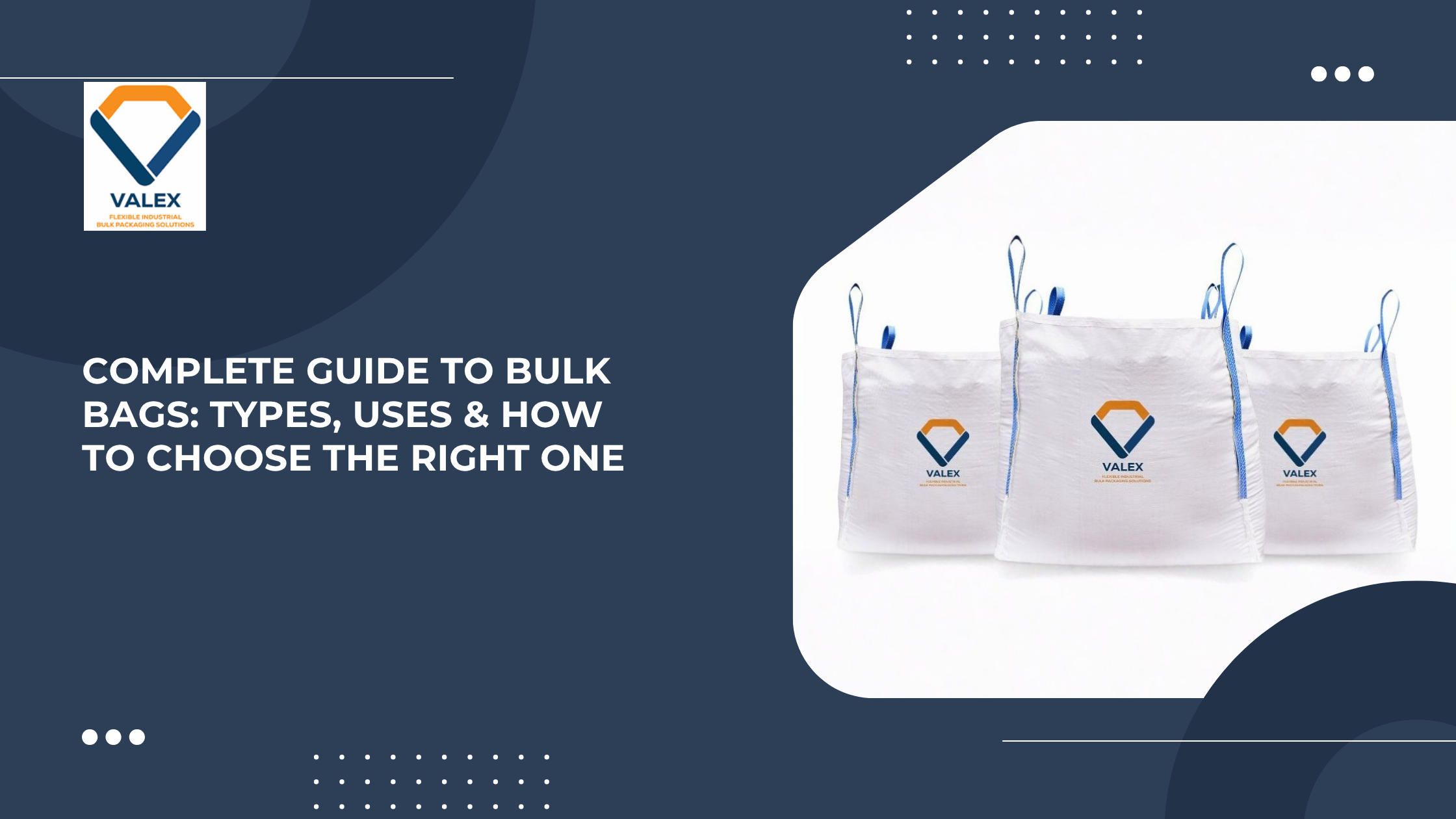
Bulk Bags (Flexible Intermediate Bulk Containers) or Jumbo Bags are large-sized bags used to contain dry materials in one unit and have the capacity to hold anywhere from 500 kilograms to 2000 kilograms. Thus, they can offer significant advantages over traditional smaller units (for example, dozens of individual small sacks). Therefore, they are much more efficient and effective in transporting goods compared to their smaller counterparts.
What Are Bulk Bags?
Bulk Bags are manufactured out of woven polypropylene fabric and have been specifically designed for transporting and storing dry, flowable contents. Bulk bags suspend their contents due to the material being woven into a network of strands (as opposed to other conventional types of containers). All bulk bags should have lifting loops located at the top part of the bag so it can be lifted via a forklift or a crane.
Main Types of Bulk Bags
Understanding bulk bag types helps you choose the right one for your application. Here are the most common:
U-Panel Bags
The most common type of bulk bag is the U-Panel Bag. They are made up of two large panels stitched together to form a U-shape, resulting in a round-bodied bag. U-Panel bags are versatile and cost-efficient, making them ideal for general use in various industries.
Baffle Bags
Next, we have Baffle Bags (also referred to as Q-bags). Baffle Bags have sewn-in baffle panels located in the corner of each bag, which allows them to maintain their squared shape when filled. This makes it easier to stack the bags and maximise loading space on a pallet, so if warehouse space is a premium, you should consider upgrading to baffle bags.
Heavy-duty Builder Bags
Heavy-duty Builder Bags have been specifically designed and manufactured for use in the construction industry. These bags are capable of holding and transporting large amounts of abrasive materials like sand, gravel, or rubble. Heavy-duty Fabric with heavy-duty seams makes them ideal for this application.
View our range of Builder Bulk Bags
Food Grade Bags
Food Grade Bags are manufactured according to strict hygiene and sanitary standards, as outlined in the BRC certification, making them suitable for being directly used to store or transport food products like rice, potatoes, or flour.
UN-certified Bags
UN-certified or hazardous material bags are manufactured and tested under strict guidelines to be safe for the transport and storage of hazardous materials. Industries involved in transporting, storing or disposing of chemicals, pharmaceuticals or regulated substances are required to use only UN-certified bulk bags.
Where Are Industrial Bulk Bags Used?
Industrial bulk bags serve as a crucial packaging solution across numerous industries. Valex Ventures supplies bulk bags for the following common uses:
-
Construction: Sand, Cement, Aggregate, Rubble
-
Agriculture & Farming: Seeds, Fertilisers, Livestock Feed
-
Chemicals & Pharmaceuticals: Powder, Granular, Hazardous Materials
-
Food & Beverages: Grains, Sugar, Flour, Spices
-
Mining & Minerals: Ore, Coal, Silica
Because each industry has unique requirements for hygienic practices, safety standards, and load capacity, selecting the proper bulk bag for an application is critical.
How to Choose the Right Bulk Bag?
Ask yourself these four questions before ordering:
1. What is the product being packaged or shipped? Food products require food-grade bulk bags, while hazardous products require UN-approved bags. Bulk bags for sharp or heavy construction materials should be reinforced.
2. How much does the product weigh? Standard FIBC bulk bags can support loads of up to 1000 kg, while heavy-duty versions can support loads of up to 2000 kg. Always verify that the bag's Safe Working Load (SWL) is equal to or greater than the weight of the product being shipped.
3. How will the product be filled and emptied? Some products can be filled from above and emptied directly out of the bottom spout, while other products require a controlled discharge from the bottom spout. These differing filling and emptying methods affect the way that the bag will be designed.
4. Do you require custom sizes or prints? If the standard bag size does not conform to your equipment, or if you wish to use branded packaging, Valex offers custom-designed FIBC bags that will meet your specific detailed specifications (e.g., size, GSM, coating, printing).
Why Certifications Matter?
When buying FIBC bulk bags, always check what certifications the manufacturer holds. At a minimum, look for:
-
BRC / BRCGS - for food-safe applications
-
UN certification - for hazardous material transport
Valex Ventures holds all of the above. You can verify this on their certifications page.
Buying uncertified bags might seem cheaper upfront, but a single compliance failure or safety incident far outweighs the savings.
For more on safe usage, the UK Health and Safety Executive (HSE) publishes guidance on bulk container handling that's worth reviewing for any operation handling heavy loads.
Jumbo Bags vs Standard Sacks - Is It Worth Switching?
If you are still using the traditional bulky sacks of 25 kg or 50 kg for your bulk material needs, switching to jumbo bags can provide you with a significant operational improvement:
-
Reducing the number of handling steps saves money in terms of labour.
-
One bulk bag can replace between 20 and as many as 40 small bags.
-
Reducing the amount of packaging waste overall.
-
Creating ease of loading, moving and storing using standard forklift equipment.
The Flexible Intermediate Bulk Container Association (FIBCA) reports that the global market for FIBCs has continued to grow year after year, driven by increased demand from the food, pharmaceutical and construction sectors – indicating that more and more companies are making this change.
The Bottom Line
Bulk bags are widely regarded as the most practical and cost-effective means for transporting large volumes of dry materials. However, the type of bag you will need depends on your application - the material you are moving, the weight of the material, and any applicable industry compliance regulations.
Valex Ventures manufactures and supplies certified FIBCs to UK and global customers for any application, including standard U-panel, baffle space-saving bags, heavy-duty bags or fully custom solutions.
Browse the full product range →
Frequently Asked Questions
1. What is the difference between a bulk bag and an FIBC?
There isn't one - bulk bag, jumbo bag, and FIBC all describe the same product container that holds large quantities of bulk goods. Bulk bags, jumbo bags, and FIBC bulk bags are all terms that describe the same type of packaging product.
2. How much weight can a bulk bag hold?
A standard bulk bag has a safe working load (SWL) ranging from 500kg up to 1,000kg. The maximum load capacity of heavy-duty bulk bags is 2,000kg. Always make sure the SWL of your bulk bag matches the weight of your contents, and remember to leave some margin for safety!
3. Can bulk bags be reused?
Some bulk bags can only be reused once, but others were designed for multiple uses; however, this will depend on how the bag was made and how much safety factor it has (in general, single-use bags have a safety factor of 5:1 while reusable bags have a safety factor of 6:1). Always check the rating of each bag before reusing it.
4. Are bulk bags safe for food products?
Yes, as long as the bag has been certified "food-grade" (BRC/BRCGS certified). Bulk bags made for industrial purposes do not have the proper certification to be used with storage and distribution of food products.
5. Can I get bulk bags in a custom size or with my brand printed on them?
Yes, you can! Valex Ventures will manufacture completely custom FIBCs (flexible intermediate bulk containers) with regard to size, weight of materials, method of filling/discharging, and printing options.


