

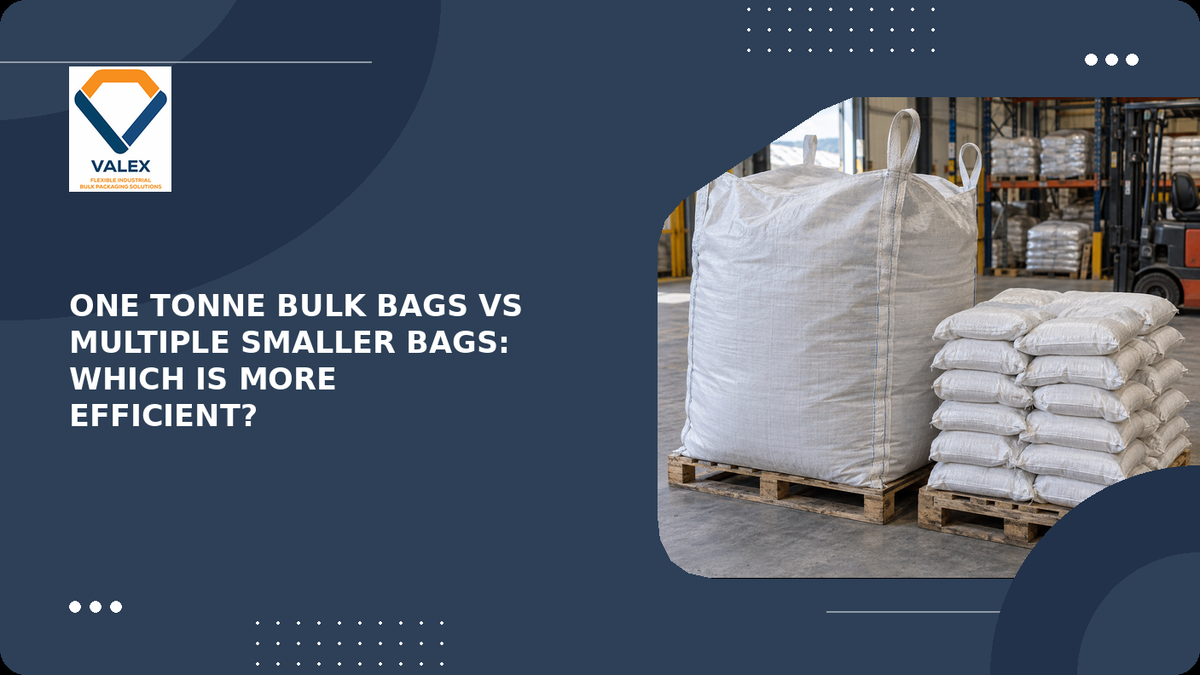
One-Tonne Bulk Bags UK vs Multiple Smaller Bags Compared
The choice between a one-tonne bulk bag and multiple smaller bags has a significant influence on labour, shipping, and facility costs associated with material storage. Weighing the contents and available infrastructure enables operations managers to choose the optimal packaging size.
Switching towards a one-tonne bag optimises daily movements of goods while balancing expenditure. Selecting the right bag size aids in improving job site safety, truck packing capabilities, and general productivity.
How Do They Boost Efficiency?
Switching to high-capacity bulk bags dramatically cuts down manual handling time. The adoption of high-capacity one-tonne bags UK significantly reduces time spent on lifting and discharging material. Instead of forklifts carrying out multiple lifts of smaller sacks, a crane or forklift can transfer the entire contents of a one-tonne bulk bag.
The reduction of individual sack handling speeds up processing, especially on active worksites where time is a determining factor.
Bulk Bags & Waste Reduction
Moving towards heavy-duty one-tonne bags UK considerably reduces single-use plastic packaging waste generated by the supply chain. Eliminating small multi-wall paper or plastic sacks minimises the amount of garbage left on a site after completion of an order.
Loading bulk bags promotes sustainability initiatives at worksites while reducing overall waste disposal costs.
Storage Density Affects Warehouse Space
The standardised bulk bags maximise storage density in a given floor space at the warehouse. The uniformity of stacked sacks takes up less space than pallets of smaller bags, which also require vertical space to be stacked horizontally.
The orderly stacking of bulk sacks increases overall storage density without using additional square footage. Neat stacking also helps in faster physical stock verification at the warehouse.
Compliance with Safety Standards
The use of certified FIBC bulk bags minimises the risk of injuries due to manual handling of material on worksite floors. Transporting materials in bulk eliminates the need for workers to carry heavy bags or lift sacks onto a worksite.
Manual lifting of sacks causes back injuries and site downtime. Using specialised equipment negates the need for lifting, as sacks can be attached to lifting loops and positioned easily.
How to Lower Shipping Costs?
The use of large one-tonne bags maximises the payload weight of a transport vehicle during road or maritime shipping. Loading bags until a vehicle reaches maximum allowable weight reduces the number of trips and overall shipping costs incurred.
Optimising the weight per trip also reduces fuel consumption per transported tonne. Faster loading and unloading at distribution centres maintain a strict transit schedule.
Is Your On-Site Equipment Ready?
Before making the switch, verify that your facilities are equipped to handle heavy bulk loads. It is important to have the necessary equipment to offload the bag. Having the right equipment enables a smooth goods flow without manual handling of material.
Having equipment with appropriate weight ratings prevents delays during filling and emptying of sacks. Specialised discharge frames enable operators to maintain control of material flow during unloading.
Conclusion
Adopting a one-tonne bulk bag accelerates material turnover while minimising costs associated with packaging waste and labour. Deciding on the most suitable FIBC bulk bag size enables a company to maximise vertical storage space at the warehouse and reduce long-term shipping costs for a growing enterprise.
Making the switch towards FIBC bulk bags UK reduces the overall operating costs while maintaining a high level of site safety. Weighing the worksite equipment and overall material handling processes caters to an informed choice concerning sizes.
Frequently Asked Questions
What are the main benefits of using one tonne bulk bags UK?
Using one tonne bulk bags UK reduces manual handling labour, optimises warehouse storage space, lowers per tonne packaging costs, and accelerates forklift loading.
Are one tonne bags UK suitable for all material types?
Yes, one tonne bags UK are suitable for powders, granules, sand, gravel, and agricultural products as long as the appropriate filling and discharge machinery is available at the worksite.
How do bulk bags UK improve warehouse organisation?
Standardised bulk bags UK take up minimal vertical space at the warehouse while keeping the floor clear and organised.
Do FIBC bulk bags UK require special handling machinery?
Yes, handling FIBC bulk bags UK safely requires the use of appropriate machinery such as forklifts, overhead cranes or hoist systems.
Are smaller individual bags ever better than a one-tonne bag?
Smaller bags are advantageous when the end-user requires manual dispensing of material at the jobsite or where there is no lifting equipment at the worksite.


