

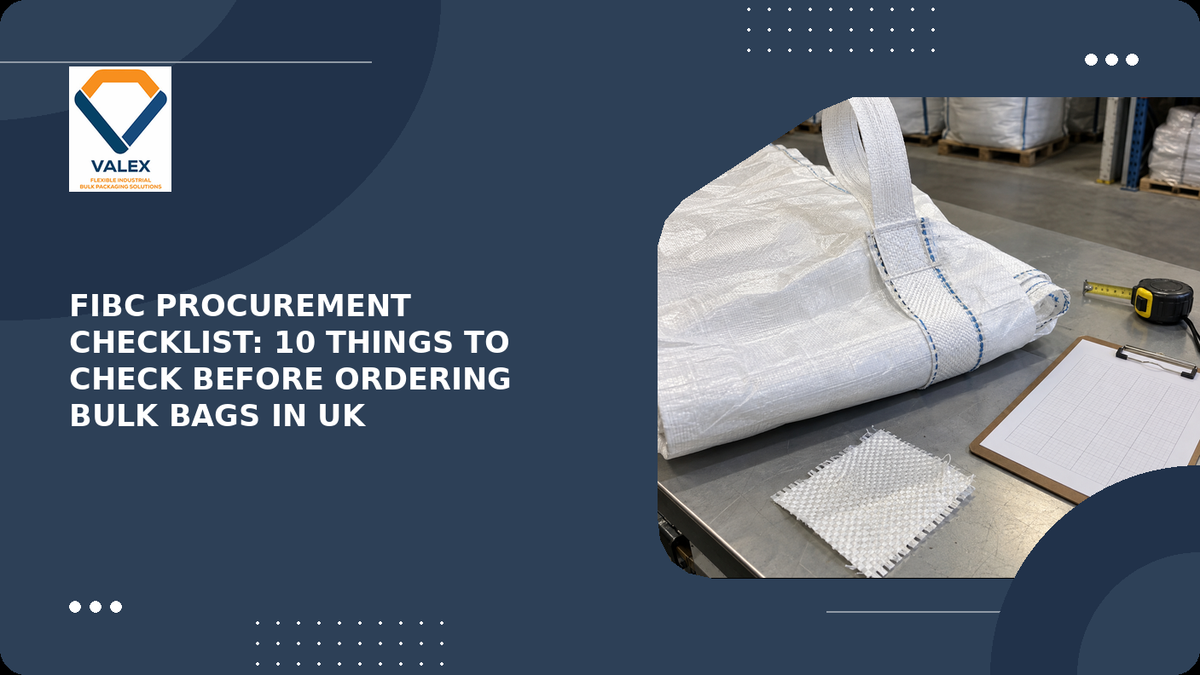
FIBC Bags Procurement: 10 Essential Pre-Order Checklist
Acquiring heavy-duty bags for industrial facilities requires evaluating safety calculations, bag layout, and storage requirements. Following a complete purchase guide for FIBC bags ensures workplace safety and reduces overhead costs.
When purchasing industrial-grade FIBC (Flexible Intermediate Bulk Container) bags, you need to balance performance with price to avoid costly downtime or damaged goods. Use this pre-purchase evaluation guide to make sure your next bulk order goes off without a hitch.
Safe Working Load Capacity
Calculating the Safe Working Load carrying capacity is your top priority when purchasing bulk bags FIBC. Determining the correct density of stored material in FIBC bags enables uninterrupted day-to-day operations without bag rupture.
Failing to match bag loading potential with actual material density creates severe safety hazards during transit and storage. Always follow engineering recommendations to ensure your bags carry heavy payloads across your production site safely.
Which Safety Rating Is Needed?
Comparing standard 5:1 (single-use) and 6:1 (multi-trip) safety factors determines how reliable your bulk bags will be under demanding conditions. The correct Safe Working Load limit guarantees structural integrity while keeping you compliant with lifting regulations.
A lower 5:1 safety factor for a single-shift bag poses deformation risks when used for multiple purposes, resulting in leakage from bags.
Fabric Coating & Lamination
The fabric design determines how well your bags shield goods from outside elements. Standard woven polypropylene for FIBC bags provides natural porosity, ideal for agricultural commodities.
However, if you are transporting fine powders or moisture-sensitive products, double-layer polypropylene laminated (coated) bags prevent dust leakage and water penetration.
Diverse Top Inlet Options
The chosen bag filling option, including spout, duffle, or open top, determines the bag’s compatibility with existing filler machines. The selected bag filling type ensures seamless bag filling during production runs. Choosing the right top option, such as a spout, duffle, or open top, ensures seamless compatibility with your existing filling machinery.
An inaccurate bulk bags FIBC filling type causes production line downtime and material waste. Customising the bag spout size to fit your machine’s nozzle ensures continuous, clean filling during high-volume runs.
The Mechanism of Bottom Discharge
The chosen bag discharge type, including spout or flat bottom, suggests that the bag must integrate with your unloading gear. Flat-bottom bags offer consistency at simple unloading stations. Alternatively, spout-bottom mechanisms give operators precise control over product flow rates when feeding downstream processing equipment.
Inner Liners: A Necessity?
If your bags are stored outdoors, prolonged UV exposure will degrade standard clear polypropylene. The chosen bag environmental shield, including UV protection or PE lining, focuses on the bag’s ability to resist prolonged UV exposure during outdoor storage.
The inclusion of special UV additives extends the bag’s outdoor storage life cycle. The inner polyethylene lining prevents chemical interaction between the bag and stored product and harmful dust penetration.
Wholesale Retains Cost Efficiency
Understanding your bag purchasing options from FIBC wholesale UK ensures maximum efficiency. Sourcing orders in containers promises savings in cost with every bag buy.
This buying route protects the buyer from polypropylene price fluctuations. Ordering via FIBC wholesale UK enables sufficient bag supply at the warehouse for uninterrupted production runs.
How to Optimise Shipping Logistics?
Reviewing shipping timelines, pallet size, and bag stock availability from preferred FIBC bags suppliers UK is essential to determine the most reliable bag supplier for businesses. The review of bag shipping timelines ensures a stable bag supply at the warehouse without production interruptions.
The assessment of bag pallet size assures bag storage optimisation at the warehouse.
Conclusion
Bulk bag procurement requires a detailed review of load limits, construction features, and material compatibility. Running through this checklist before placing an order safeguards your profit margins, keeps your employees safe, and protects your operational workflow.
Frequently Asked Questions
What is the standard load capacity for FIBC bags?
The standard bag load rating typically ranges between 500 kg and 2,000 kg, depending on fabric weight and loop reinforcement.
How do FIBC bulk bags prevent moisture contamination?
Coated polypropylene materials and inner polyethene liners prevent dust, moisture, and foreign particles from reaching bag contents.
How do FIBC bags suppliers UK ensure quality standards?
UK-based FIBC bags suppliers perform a series of tensile, drop, and top-lift tests and provide certificates of compliance to each buyer.
Are cost savings available through FIBC wholesale UK supply chains?
Wholesale bag purchasing guarantees reduced cost per bag and consistent supply levels for manufacturing facilities.
What safety factors apply to single-use FIBC bulk bags option?
Single-use bag options feature a minimum 5:1 safety factor, signifying that the bags can withstand five times the stated Safe Working Load without structural failure.


