

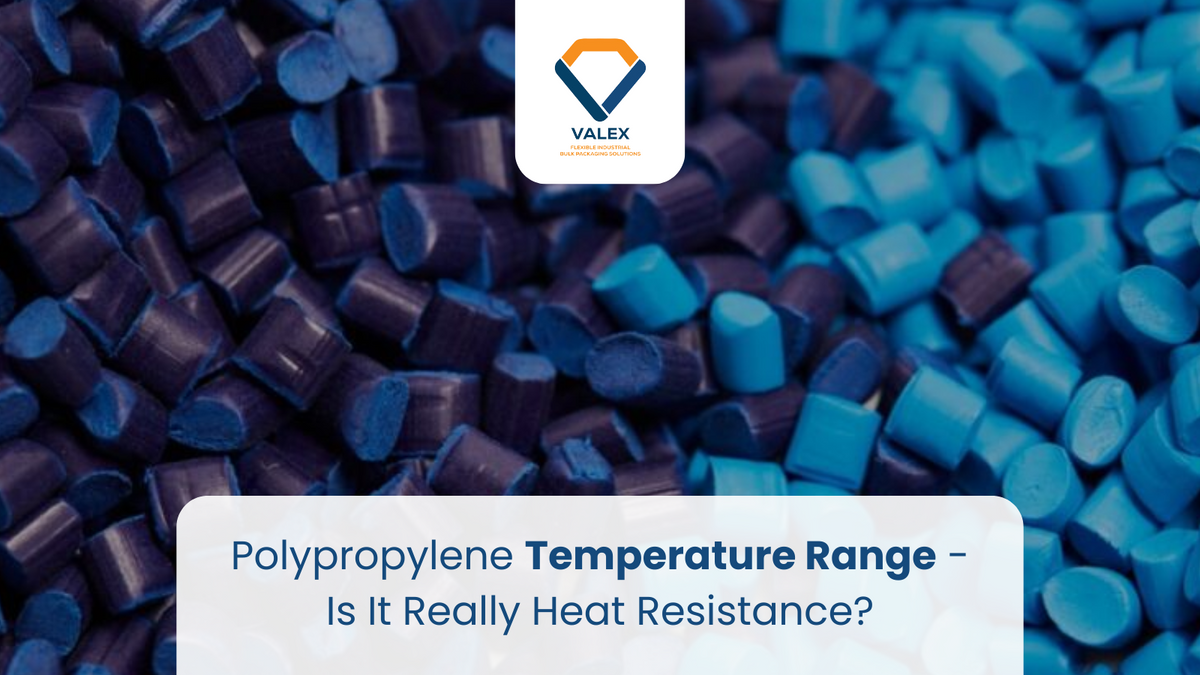
Quick summary: Polypropylene's uses range between -20C to 100C under regular conditions, with brief exposure to temperatures as high as 120C. It melts between 160c and 170c, far higher than these everyday temperature limits. This high melting point makes polypropylene a popular substance for hot filling packaging, safe for use in microwaves, automotive parts, and FIBC bags.
Polypropylene is one of the world's most commonly used plastics. It can be found in FIBC bags, automotive parts, filtering fabrics, and medical products. One of the most asked questions regarding polypropylene is its maximum temperature limit before losing strength or shape, and therefore what is its maximum operating temperature?
In this article, we will outline: polypropylene temperature ranges, the polypropylene melting point, its formula, processing temperatures, and where polypropylene will be found - including nonwoven fabrics.
What Is the Melting Point of Polypropylene?
The PP melting temperature typically falls somewhere between 160 degrees Celsius and 170 degrees Celsius, which is significantly above the maximum temperature that polypropylene can safely be used at in everyday situations such as storage of hot food or liquids in containers made out of polypropylene. If polypropylene is required to perform at temperatures near or above the melting point of polypropylene, then the physical properties of polypropylene will start to degrade when the temperature approaches the melting point.
What Is Polypropylene Material?
Polypropylene, or PP, is a synthetic thermoplastic material that is made by polymerizing propylene monomers. The chemical structure of polypropylene has useful characteristics such as being lightweight, chemically resistant, and having good heat-resistant properties. The base chemical structure of polypropylene is (C₃H₆)ₙ, which is the repeating unit of the propylene monomers that are chemically bonded to form long, flexible polymer chains.
Polypropylene Chemical Structure and Formula:
-
Monomer - C₃H₆ (propylene)
-
Polymer - (–CH₂–CH(CH₃)–)ₙ
-
Crystallinity - Semi-crystalline (ordered crystal areas and amorphous regions)
The semi-crystalline nature of PP is the reason for PP's ability to provide a combination of good heat resistance and excellent toughness, which makes up a significant portion of the overall polypropylene thermal properties.
Polypropylene Processing Temperature
Before PP (polypropylene) can be used as a finished product, it has to undergo either extrusion or injection molding to render it into a usable form.
Typically speaking, processing temperatures for polypropylene are as follows:
-
Barrel Temp: 180 to 240 C
-
Melt Temp: 200 to 260 C
-
Mold Temp: 20 to 80 C
Maintaining these temperature ranges, it allows polypropylene to properly melt, flow, and cool into a stable part.
Is Polypropylene Heat Resistant? Understanding Its Temperature Range
Polypropylene heat resistance is based on its capabilities and limitations. For example, polypropylene is normally safe up to around 100 C; beyond this temperature range, the possibility of warping or degradation may occur. Additionally, although polypropylene is technically heat-resistant, there is a limit to the amount of time that a piece can be at temperatures above 120 C (usually just for a brief period) since it may potentially damage the piece in some way (most notably for hot-filling items, as an example).
This level of polypropylene heat resistance is a great option for applications such as: microwaveable containers, bottles that undergo hot fill, or any item that is around the engine of a car.
Polypropylene vs Other Plastics: Temperature Comparison
Polypropylene (PP) is somewhere in the mid-range for heat resistance when you compare it with other popular plastic materials. Since polyethylene (PE) will melt at a lower temperature compared to PP, this means that PP can withstand slightly greater temperatures before melting or deforming. For this reason, PP is often used in applications where exposure to hot fill, such as food packaging and repeated heating, is expected, while PE is better suited to applications involving more moderate temperatures or flexibility (such as plastic bags and films).
Where Is Polypropylene Used?
Food and Beverage
Because of its heat resistance, PP can safely be reheated and sterilized. This makes PP the ideal plastic for disposable cups, microwave trays, and hot-filled containers.
Medical and Hygiene
In hospitals and doctor offices, syringe barrels, specimen containers, and non-woven gowns are commonly manufactured using PP. A similar non-woven PP fabric material that provides an effective breathable barrier is used to produce masks and gowns in surgery.
Automotive and Electrical
PP is used to manufacture battery cases, wire insulation, and engine covers that must withstand high levels of engine heat as well as exposure to harsh chemicals.
Textiles and Filtration
Non-woven PP fabric is routinely used to manufacture geotextiles, coffee filters, and air and liquid filters because of its high physical strength and its ability to be manufactured with a controlled porous structure in fabric form.
If you need industrial-grade polypropylene products or FIBC bags, reach out to Valex Ventures for expert advice and customized solutions.
Frequently Asked Questions
At what temperature does polypropylene melt?
Polypropylene generally melts between 160°C and 170°C.
Can polypropylene withstand boiling water?
Yes. PP is rated for continuous use up to 100°C, so boiling water is generally safe without causing damage or deformation.
Is polypropylene safe for microwave use?
Yes, almost all types of polypropylene are labeled microwave safe because they can withstand the high temperatures created by a typical microwave.
Does polypropylene become brittle in cold temperatures?
Yes, once polypropylene reaches around -20°C (-4°F), it becomes less flexible and more susceptible to breaking.
What is the typical PP temperature range?
Polypropylene is safe to use at temperatures between -20° and 100° and can withstand short-term exposure to temperatures up to 120°C (248°F).
What processing temperatures are used for PP?
The melt temperatures used for extruding and injecting will generally fall between 200-260°C (392-500°F), with the barrels of the machines running between 180-240°C (356-464°F).


