

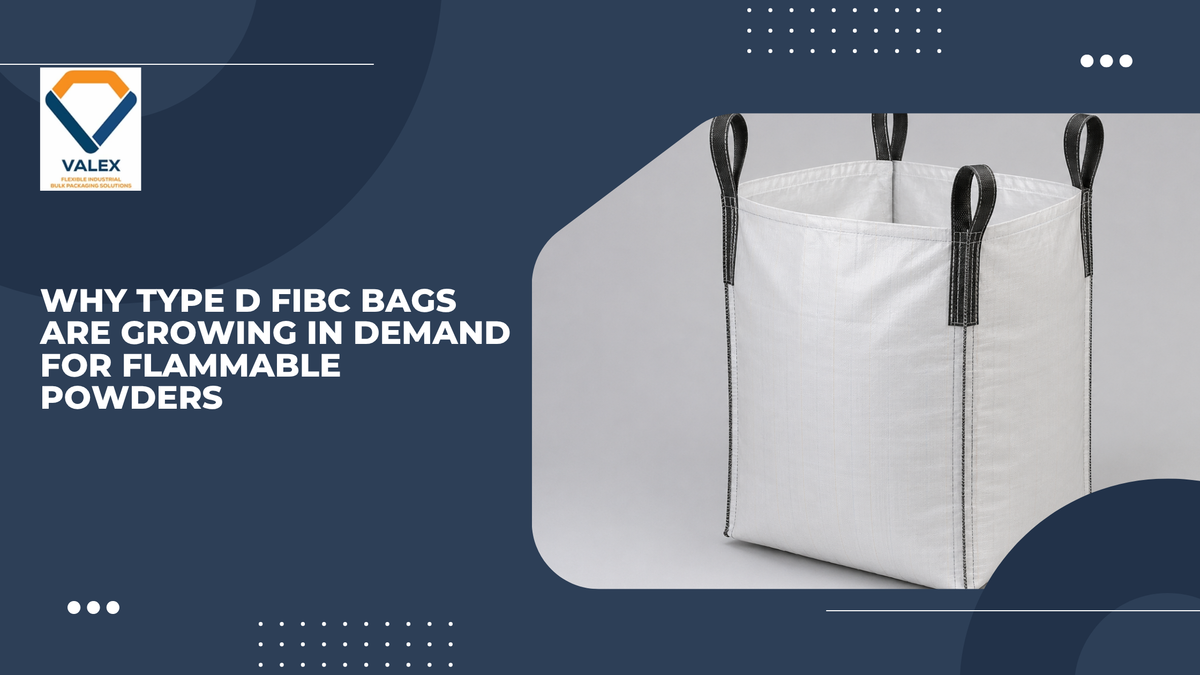
In factories, dealing with static electricity isn't just a technical detail; it’s absolutely vital for safety. If companies work with dust that can easily catch fire or are around flammable fumes, what they use to package and move large amounts of material could mean the difference between everything running as it should and a huge disaster.
And with safety rules getting stricter in the UK and throughout Europe, Type D FIBC bags are becoming far more popular than ever before. These special containers have a clever way of making sure electrostatic charge doesn't cause problems, and they get around mistakes people often make when using ordinary grounding techniques.
What Is a Type D FIBC Bag?
Type D FIBC bags (Flexible Intermediate Bulk Containers) are designed to effectively hold and transport combustible powders and other combustible products as bulk packaging in areas where an electrostatic discharge can potentially create an explosive hazard or fire. Type D FIBC bags are made with fabrics that have static-dissipating properties which provide a means for electrostatic charge to dissipate through the bag material to the surrounding atmosphere thus eliminating the need for any separate grounding or earthing connection. Industries that utilize
Type D FIBC bags include: chemicals, pharmaceuticals, food processing and minerals. By eliminating the possibility of igniting an explosive or hazardous atmosphere due to spark discharges during filling, emptying, or handling of Type D FIBC bags, Type D FIBC bags provide an increased level of safety in the workplace and promote compliance with all applicable safety regulations.
Understanding the Static Risk in Bulk Handling
Here’s how static electricity becomes a danger when you’re moving large amounts of something. As dry powders pour through a pipe or are rubbed by the inside of a container, they build up static electricity. On a normal bulk bag, this electricity stays on the outside. But if the powder is flammable, or if there’s flammable gas in the air around it, even a tiny spark (that is, electricity jumping from one place to another) could cause a dust explosion.
The industry uses a system of bag types based on how they handle static electricity to lessen this danger. Conductive FIBC bags (Type C), which conduct electricity, have always been used in dangerous areas. However, people are now moving to static dissipative FIBC bags (Type D) because of the special ‘ground-free’ protection they offer.
Whether you need anti-static bulk bags, UN-certified solutions, or expert guidance on the right bag for your specific materials, explore our full range of FIBC bulk bags at Valex Ventures - trusted by UK manufacturers and processors for quality, compliance, and reliability.
What Makes Type D FIBC Bags Unique?
Type D FIBC bags are made of a non-conductive fabric that absorbs static electricity and releases it into the atmosphere through a process known as the “low-energy corona discharge”.
Unlike Type C conductive FIBC bags that require being electrically plugged into an earthing point (earthing cable) in order to be safe, Type D bags do not need grounding, and the charge is bled off the bag's surface by means of Cromax or Texene technology.
Key Benefits of Type D Technology:
-
Elimination of Human Error: The main cause of accidents with Type C bags is the failure to secure the grounding clamp. Type D bags eliminate this risk.
-
Operational Efficiency: Without the need for manual grounding and testing for continuity, filling and discharging cycles are significantly faster.
-
Variability: It is ideal to use bulk bags for flammable powders when grounding is not easy to maintain or if permanent grounding is not practical due to moving machinery.
Why the Demand is Growing for Anti-Static Bulk Bags
Three main driving forces behind the increasing demand for anti-static bulk bags are safety regulations, the increasing use of fine powder processing, and the pressure of insurance companies to reduce risk.
1. ATEX Directive Compliance
The DSEAR (Dangerous Substances and Explosive Atmospheres Regulations) 2002 in the UK requires that employers reduce the risks of fire and explosion in their workplaces. With more powders, such as flour, sugar, pigments, and pharmaceuticals, becoming potentially explosive, the need for static dissipative FIBC bags has been considered from a “best practice” to a regulatory necessity in Zones 21 and 22.
2. Advanced Material Science
Modern Type D FIBC bags are far more durable and reliable than in the past. Older bags would often suffer from "charge decay" over time, but today’s high-performance fabrics ensure that the dissipative properties of bags will last the entire life of the bag, even when subjected to extreme humidity or extreme dryness.
3. Risk Mitigation in the Supply Chain
"Fail Safe" systems are increasingly preferred by insurers. Because Type D FIBC bags remain safe even if a worker omits a grounding step, they act as a built-in fail-safe. This has led UK chemical and food manufacturers to choose Type D as their main type of hygienic bulk packaging for hazardous substances.
Choosing the Right Bag for Your Operation
However, despite the incredible safety of Type D FIBC bags, they must be used correctly. It is essential to ensure that the surrounding environment is “earthed” (i.e., the floor and the personnel handling the bags are grounded) even if the bag itself is not. This prevents a situation where a person standing on a non-conductive surface may receive a charge from the bag (the “isolated conductor” effect).
Correct handling is just as important as choosing the right bag. From filling and discharging to forklift use and storage, make sure your team follows every step correctly - read our FIBC Safe Handling Guidelines to keep your operations safe and compliant.
Safety Standards and Verifiable Sources
When procuring bulk bags for flammable powders, it is important to ensure that the items you are buying conform to international testing standards. The two main documents that you should take into consideration when purchasing a bulk bag are:
-
IEC 61340-4-4: This is the standard for "Electrostatics – Part 4-4: Standards test methods for specific applications – Electrostatic classification of flexible Intermediate Bulk Containers (FIBC)."
-
CENELEC TR 50404: This is the European guide that aims to avoid hazards due to static electricity.
-
The DSEAR Regulations (UK): This gives you guidance on how to handle combustible dust safely in your area of work.
Final Thoughts
The move to Type D FIBCs is a huge advancement in industrial safety. By using static dissipative FIBC bags, manufacturers take away the weakest link in their safety chain - human error. We anticipate that Type D will be the default choice for any facility that handles combustible solids by 2027, giving peace of mind and protecting both people and assets.
If you are currently using conductive FIBC bags and want more information about how the switch to Type D will benefit your safety program, or if you would like a technical consultation on your current packaging materials, contact Valex Ventures team today.
Frequently Asked Questions (FAQs)
1. Can Type D FIBC bags be used in the presence of flammable vapours?
Yes, provided that the equipment and people in the surrounding area are sufficiently grounded, Type D FIBC bags made from quality materials can safely be used in environments that have flammable vapours or gases with a minimum ignition energy (MIE) of 0.14mJ.
2. Are anti-static bulk bags more expensive than standard bags?
Although the initial cost of anti-static bulk bags is higher because they are made of speciality yarn with anti-static properties, the total costs can be reduced by decreasing insurance premiums and eliminating maintenance associated with grounding equipment.
3. Do Type D bags require any maintenance?
Type D bags do not require any maintenance. Unlike Type C bags, which require periodic electrical continuity testing to ensure that they are functioning properly, Type D bags are designed to perform their functions for their entire life cycle without mechanical testing; however, they should always be inspected for physical damage and accumulated contaminants (such as thick paint and grease) that could create insulation on their surfaces.
4. What is the difference between Type C and Type D bags?
The difference between Type C and Type D bags is the requirement of grounding. Type C bags are conductively grounded and, therefore, must be grounded to be used safely. Type D bags are an anti-static, non-conductive bag that dissipates charge through corona discharge and consequently do not need to be grounded.
5. Can I use a liner with a Type D FIBC?
Yes, liners can be used with Type D FIBC bags, but they must be selected carefully. Only anti-static or conductive liners should be used. Standard plastic liners can accumulate static charge and create a new ignition risk, which would defeat the purpose of using a Type D bag. Always confirm liner compatibility with your supplier based on the product's MIE value


