

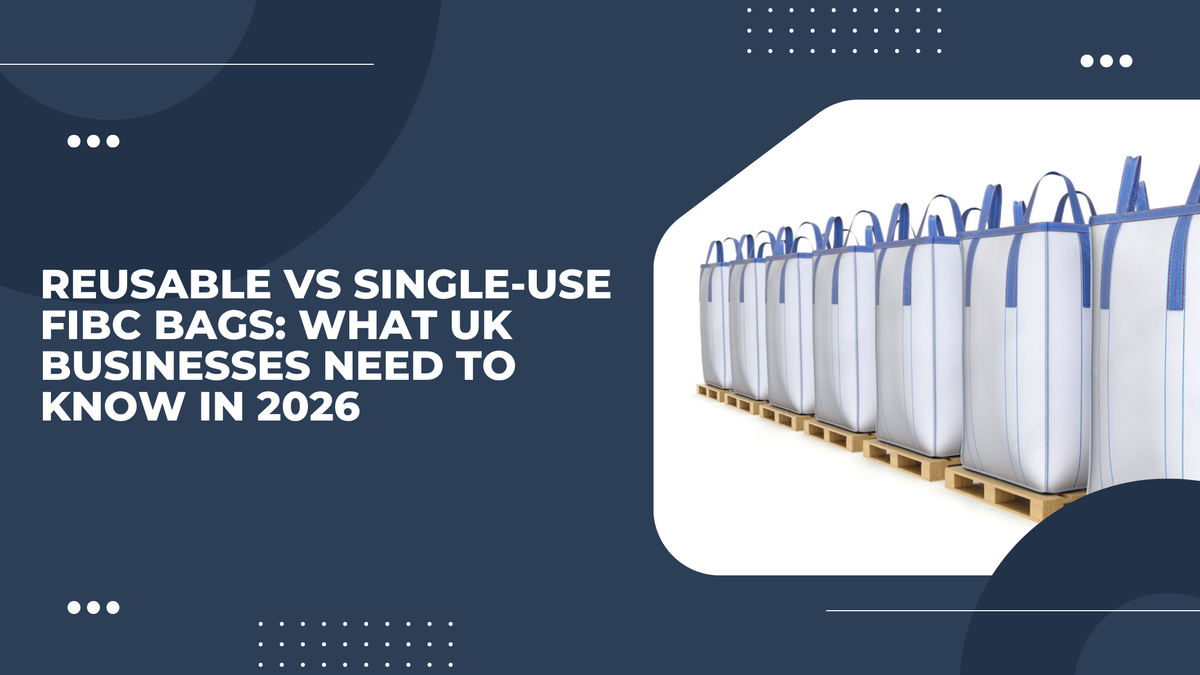
The UK EPR framework has become much stricter, and businesses are being forced to reduce industrial waste. The EPR framework changes combine to make the choice of reusable FIBC bags vs single use much more strategically focused than before. This guide is designed to offer a factual basis to make the correct decision for procurement managers and logistics teams in the UK.
Understanding the Difference
FIBCs, sometimes called bulk bags or jumbo bags, are manufactured from woven polypropylene fabric. They come in a variety of sizes and styles for a wide range of industries. Almost anything can be transported or stored in FIBCs, including grains, sand, chemicals, cement, and other construction aggregates.
Single-use FIBCs are for only one transport. After being emptied, single-use FIBCs should ideally be disposed of in a recycling program; however, the containers commonly end up in a landfill. Their low upfront cost and impracticality of reuse due to contamination make single-use FIBCs a popular choice for food-grade and hazardous industries.
Unlike single-use bags, reusable FIBC bags are built to a higher standard. For instance, reusable FIBCs are made from thicker woven polypropylene with not only reinforced seams and stitching, but also reinforced, stronger, UV-resistant lifting loops. Multiple handling cycles make them more cost-effective than the single-use FIBCs.
The Environmental Case
The issue of Sustainability has moved from the periphery into the centre of the conversation. The UK introduced a Plastic Packaging Tax, which came into effect in April 2022. The rate has since risen annually in line with CPI inflation — standing at £217.85 per tonne from April 2024, £223.69 per tonne from April 2025, and increasing further to £228.82 per tonne from April 2026. This tax applies to plastic packaging that contains less than 30% recycled content, and standard single-use FIBCs fall within its scope
Reusable FIBC bags have two benefits for a business. First, it decreases the taxable liability. Second, it decreases the footprint of the packaging. A peer-reviewed life cycle analysis published in the Journal of Cleaner Production (Leejarkpai et al. 2016) found that single-use packaging systems result in greater carbon emissions and greater depletion of resources than the use of reusable packaging systems. This is even more pronounced when the packaging is reused more than 4 times.
The UK Solutions, based on the Waste and Resources Action Programme, considers sustainable FIBC bags and multi-trip bulk solutions as a priority in its 2023 flexible packaging sector roadmap. The research indicates that industrial flexible packaging is one of the largest unexplored areas in UK manufacturing. For businesses that are implementing the ISO 14001 environmental management system, the use of reusable jumbo bags also helps meet other sustainability goals.
When Single-Use Is the Right Choice
Responsible leadership means saying that single-use FIBCs are not always the wrong choice. There are plenty of examples when they are the best or legally necessary option:
-
Food-grade uses - Where there is the potential of cross-contamination of two or more different food ingredients, the use of single-use bags becomes necessary, especially if the company holds BRC or SQF certification.
-
Dangerous goods - UN-certified FIBCs designed to carry certain types of dangerous goods are typically only allowed to make one journey in order to keep the integrity of the structure of the bag and to comply with the law.
-
Materials that are highly abrasive and/or wet - Mining and certain chemical applications can make the use of FIBCs too dangerous to use more than once (the bag fails structurally).
-
One-way transport - If it is more costly to ship back the empty bags than to throw away the bags, then single-use bags are the more sensible option.
The critical factor is coming to an informed decision and not choosing the cheapest first option.
Before each use, reusable FIBC bags must be carefully inspected for UV damage, cuts, and seam integrity. For full guidance on correct lifting, filling, storage, and disposal, refer to our FIBC Safe Handling Guidelines.
The Financial Case: Total Cost of Ownership
Procurement teams can focus exclusively on unit price. For reusable FIBC bags, the cost is typically 30% to 60% higher than that of a single-use bag. But that number changes signifiantly when looking at multiple reuse cycles.
Let’s look at a simple example. If the reusable FIBC bag costs £12 and achieves six reuse cycles, the cost is £2 per use. For an £8 single-use bag, the cost is £8 per use. For an annual bag volume of 1,000, this means £6,000 is saved in a single year. This is all before factoring in the costs for disposal, the liability for the Plastic Packaging Tax, and the EPR fee modulation. EFIBCA has published guidance that says for packaging costs to be managed effectively for a multi-use and multi-trip program, a volume of 500 cycles must be achieved per year.
Recyclable Bulk Bags: Closing the Loop
If a business chooses single-use FIBC bags or reusable FIBC bags, the importance of end-of-life management is still the same. All FIBCs are made with polypropylene, which is technically recyclable (PP, resin code 5). Recyclable Bulk bags can be sent back to a specialized processor, which makes them into a secondary raw material for the construction and automotive industries.
Eco-friendly industrial packaging does not stop at the point of purchase. It is also the responsibility of the buyer to consider where the bag will end up after its useful life has expired. Before committing to a bulk booking program, businesses are advised to ask their suppliers for clear instructions on recycling routes.
To learn more about how Valex approaches sustainable material selection and recycling, visit our Recyclable Materials page.
What UK Regulations Say in 2026
Three main regulatory frameworks are influencing bulk packaging decisions for UK businesses in 2026
-
Plastic Packaging Tax (PPT): HMRC imposes a tax of £228.82 per tonne on plastic packaging with less than 30% recycled content from April 2026. Businesses transporting large volumes of FIBCs should evaluate their PPT risks and determine if the use of sustainable FIBC bags with greater recycled content would mitigate that risk.
-
Extended Producer Responsibility (EPR): For 2025, all UK companies with a turnover in excess of £2 million and that deal in excess of 50 tonnes of packaging per year will have to pay an EPR charge based on the packaging they sell to the market. Reusable and recyclable packaging has lower modulated fees, so switching to recyclable bulk bags makes sense both financially and environmentally.
-
BS EN ISO 21898:2004 - A UK and European regulation controlling the design and safety of FIBCs, including the assessment of safety for re-use. Suppliers of reusable Jumbo bags should comply with the regulation before supplying the bags.
Final Thoughts
The reusable or single-use FIBC bag discussion has no definitive answer, but the other bag types provide an adaptable approach to the dilemma. From 2026, businesses in the UK will face an intersection of factors, including legal, financial, and empirical use-based business sustainability. Additionally, business stakeholders, clients, and even the general public will have concerns that call into question the business's sustainability. Where a FIBC bag application presents such an opportunity, reusable FIBC bags provide companies with a decreased cost and environmental impact, alongside responsible and compliant end-of-life bag recycling, which the company would do even if the FIBC bags were single-use. Strategically aligning your choice with UK packaging laws from the start minimises cost and waste and maximises business protection.
Are you in search of reusable or recyclable FIBC bags that adhere to UK sustainability and compliance standards? Valex Ventures can support you in selecting the most suitable bulk packaging solution for your operational, environmental, and compliance needs.
Frequently Asked Questions
1. How many times can a reusable FIBC bag safely be used?
Generally, FIBC bags designed to be reusable can complete between 5 - 10 cycles. The EFIBCA suggests that FIBC bags should be visually checked to assess UV damage, cuts, abrasions, and to inspect the seam integrity. This should be done before each use.
2. Are reusable FIBC bags subject to the UK Plastic Packaging Tax?
FIBCs containing 30% or more recycled content by weight are not chargeable under the Plastic Packaging Tax, provided the recycled content can be evidenced through certified material declarations from your supplier.
3. Can reusable jumbo bags be used for food-grade applications?
Sometimes, yes. Stringent cleaning procedures are required between uses. The use program must also be risk assessed with pertinent food safety standards, such as BRC or ISO 22000. Many food businesses prefer to use single-use bags to alleviate all contamination risk.
4. What is the difference between recyclable and reusable FIBC bags?
A reusable FIBC bag is designed to withstand multiple transport cycles. A recyclable bulk bag deals with its end-of-life option as it can be returned to the state of raw polypropylene, whether single-use or multi-trip. The best option is a bag that is reused throughout its working life and is recyclable when the work is finished.
5. How does EPR affect FIBC purchasing decisions?
Under the UK EPR framework, businesses above the reporting threshold pay fees based on the packaging they place on the market. Reusable and recyclable packaging formats attract lower modulated fees when compared to non-recyclable, single-use packaging. Therefore, transitioning to sustainable FIBC bags will reduce ongoing EPR costs and provide additional savings.


