

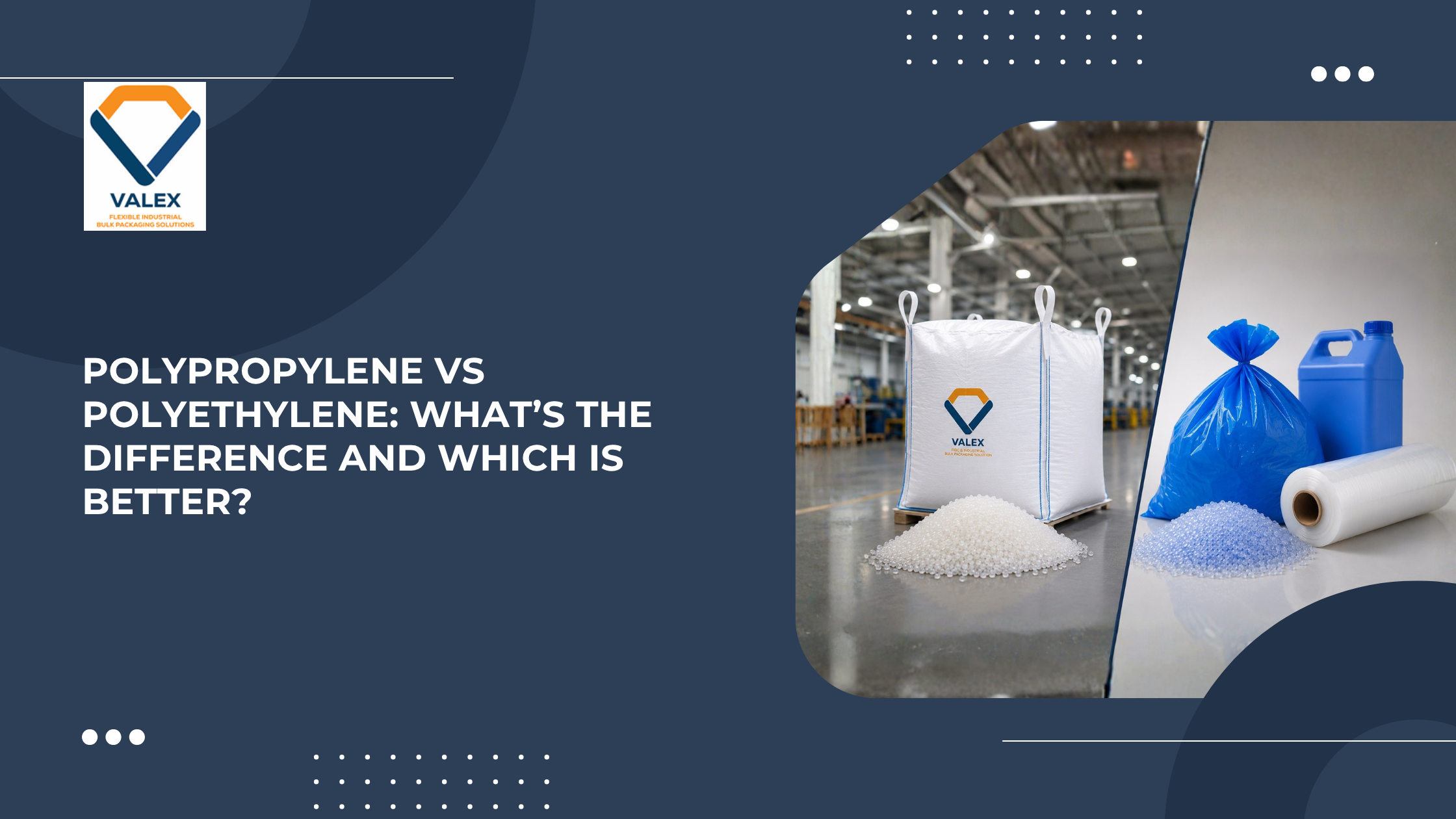
Many professionals in the packaging, manufacturing, or logistics industry encounter both polyethylene vs polypropylene in product packaging and other applications. In fact, these thermoplastics are so common that they may be confusing to identify and understand their differences, but here we will provide you with the facts about each type of plastic without using any technical jargon.
This guide breaks down the real difference between PE and PP - clearly, without the jargon.
First, What Are They?
Polypropylene (PP) and polyethylene (PE) are both thermoplastics because they can be melted down, reformed, and reused over and over again. They are both considered polyolefins, but polypropylene is made from propylene while polyethylene is made from ethylene monomers.
Polyethylene is more flexible than polypropylene because it has a different molecular structure; this structure gives it great strength and toughness as well as good moisture resistance. Polyethylene is often used in applications such as bags, bottles, and food wrap.
Polypropylene is more rigid and crystalline due to its molecular structure; thus, adding to its strength and its ability to withstand heat. It is generally used in containers, components for cars, and also textiles.
In conclusion: Polyethylene is more flexible; polypropylene is more rigid. Both types of materials can serve useful functions, but they are utilised for different purposes.
Polypropylene vs Polyethylene: Key Differences at a Glance
1. Strength and Rigidity
PP polymers are a strong material with a rigid structure; thus, they are frequently utilised for very substantial goods such as automotive parts or withstanding abuse (reusable containers). PE is a softer material with more flexibility (a result of its lower molecular weight) than PP. Therefore, it will be preferred for products that need to be able to bend or endure large amounts of impact (such as plastic bags or playground areas).
For bags used as FIBCs to carry heavy loads (for example, bulk materials), PP wins...
2. Heat Resistance
PP resists higher temperatures than PE does. PP can withstand more temperature extremes than PE; therefore, if you wanted to use one or the other for a heat application, PP would be the better choice. PE's melting range is 105-115 degrees Celsius. PP's melting point is much higher, making it more resistant to the higher temperatures of the processing phase– which makes it the ideal choice for manufacturing applications that are exposed to high temperatures or hot material applications compared to PE.
3. Flexibility and Fatigue Resistance
PP exhibits excellent fatigue resistance due to its high strength-to-weight ratio, i.e., the hinge can be successfully opened and closed numerous times without breaking down. For this reason, most grades of PP are widely used in making everything from ropes to car bumpers to carpeting and roofing, to name a few.
4. Chemical Resistance
Polypropylene has superior chemical resistance to acids and many organic solvents compared to polyethylene; however, polyethylene may degrade over time with consistent exposure to certain chemicals.
When considering the reliability of materials for chemical, carbon, and food ingredient applications, PP vs PE tilts toward polypropylene for longer-term reliability.
Need chemically resistant FIBC bags for industrial use? Explore our full product range →
5. Water and Moisture Resistance
Both PE and PP have very good moisture resistance; however, polyethylene has excellent moisture-resistant capabilities while retaining excellent mechanical properties. Similar to PE, polypropylene has excellent resistance to moisture and is therefore widely used throughout the fluid handling industry.
Both materials are excellent choices where moisture is a concern.
6. Cost
In general, polyethylene costs noticeably more than polypropylene... Polypropylene homopolymers average £0.65 - £0.75 per kg, while HDPE averages between £1.10 - £3.30 per kg.
For high-volume industrial packaging, this cost difference adds up - another reason polypropylene vs polyethylene often resolves in favour of PP for bulk bag manufacturing.
7. Clarity
Polyethylene can be produced with optical clarity, whereas polypropylene has only been manufactured in a translucent form resembling a milk container.
Therefore, when visibility of contents inside a FIBC/bag is an important factor, polyethylene wins.
8. Cold Temperature Performance
Polyethylene works quite well in cold weather, which is especially important for outdoor signage and cold chain logistics.
PP vs PE in FIBC Bulk Bags: Why PP Dominates
When it comes to industrial bulk bags, polypropylene vs polyethylene is really no contest; PP is clearly the industry leader for the following reasons:
PP woven fabric bag can support loads between 500 kg and 2000 kg. Woven PP fabric is very strong, resistant to acidic and alkaline chemicals, and has high humidity and moisture resistance, as found in the agricultural, chemical, construction, and food manufacturing industries. Woven PP bags have a low unit price and can be recycled into new products after they are used.
All FIBC from Valex Ventures use recyclable polypropylene and are chosen for their performance, safety, and environmental responsibility.
Committed to sustainable packaging? Read about our recyclable materials approach →
Polyethylene vs Polypropylene: Which Is Better?
Neither option is superior to the other ... it really depends on how you want to use them.
Choose PP when you need Heat resistance, rigidity, chemical resistance, fatigue resistance, or volume cost efficiency.
Choose PE when you need optical clarity, flexibility, cold-temperature performance, and moisture-barrier properties for consumer packaging.
Polypropylene vs polyethylene (for heavy-duty, industrial bulk packaging) consistently points to PP as being the best material to support the load, environment, and operational demands of our industries that cannot afford materials to fail.
Not sure which bag specification suits your operation? Talk to our team →
The Bottom Line
The differences between PE and PP result from both structure and function. Polyethylene is flexible, transparent, and capable of withstanding low temperatures; whereas polypropylene has rigidity, can withstand chemical exposure and high temperatures, and has also become the preferred packing material in industrial bulk shipping.
Understanding polypropylene vs polyethylene can also aid you in making smarter purchasing choices when making bulk purchases of FIBC for construction, agricultural, chemicals, or food.
Frequently Asked Questions
1. What is the main difference between polypropylene and polyethylene?
The main difference between polypropylene and polyethylene is in their composition: PE is softer and melts at lower temperatures than PP due to its greater flexibility, while PP retains more rigidity and chemical resistance at higher temperatures.
2. Which is stronger - PP or PE?
Generally speaking, polypropylene has a higher rigidity and tensile strength compared to polyethylene. However, polyethylene has better flexibility and impact resistance than polypropylene.
3. Is polypropylene or polyethylene better for bulk bags?
In the case of using bulk bags (i.e., FIBC bulk bags), polypropylene is used more than any other plastic material because it is the ideal combination of weight, durability, chemical resistance, and cost for industrial use.
4. Are both PP and PE recyclable?
Both polypropylene and polyethylene can be recycled. Historically, however, polypropylene has a much lower recycling rate. With the increased demand for sustainable packaging, this trend is shifting.
5. Which material is cheaper - PP or PE?
When considering price, polypropylene is generally less expensive than polyethylene, making it the ideal solution for high-volume production and bulk packing.


