

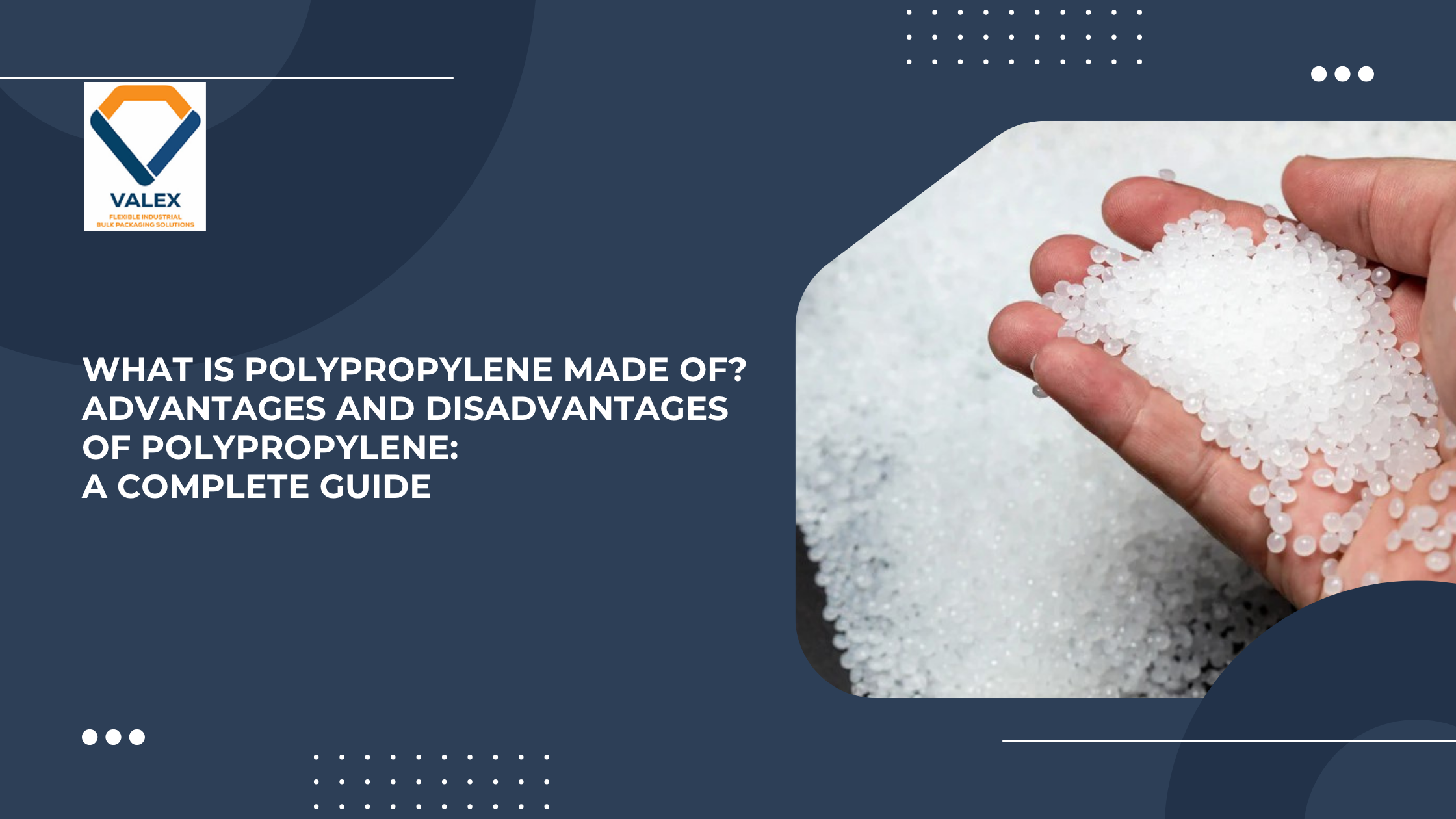
Whether you have ever worked with a bulk bag, food container or industrial packaging solution, chances are you have already interacted with polypropylene material without realising it; this is commonly one of the most frequently used plastic polymers throughout the globe, and rightly so!
But what is polypropylene made of, exactly? And is it a viable option to use in industrial packaging applications? Let's break it down simply.
What Is Polypropylene Made Of?
Polypropylene plastic composition starts with a single molecule called propylene - a byproduct from the refining of petroleum or natural gas. Propylene molecules are linked together (through a process known as polymerisation) to form long chains of stable polymer - which is commonly known as polypropylene.
There are generally two types of polypropylene; 1) homopolymers, which consist of only one style of polymer (used for general purpose applications), and 2) a copolymer version that will have various additives to improve certain properties (like ethylene added to improve impact resistance and flexibility) depending on how much ethylene is added, you can create block copolymers (which have ethylene content between 5% - 15%), or random copolymers (which should contain 1% - 7% ethylene).
This variation is what makes polypropylene material so versatile - it can be tuned for different industrial requirements.
PP Material Properties: What Makes It Stand Out
PP material properties are one of the reasons they are ubiquitous in many industries- from food processing to construction.
Polypropylene (PP) is the least dense of all commonly manufactured commodity plastics, and it can safely be used at temperatures of 100°C and has excellent chemical resistance to a variety of different chemical compounds.
The following is a summary of just a few of the many different characteristics and properties found in PP:
-
Density (g/cm³): 0.895–0.92 - lightweight materials can help you save money by reducing costs associated with transporting container lids, parts for automobiles and fragrances made from fibres.
-
Chemical Resistance: PP will not undergo physical or chemical reactions with dilute acids and bases; hence, it lends itself to the manufacture of containers filled with liquids, cleaning materials or first-aid kits.
-
Electrical Insulation: PP is a poor conductor of electricity, which makes it a good choice for making electronic components and insulators for electrical cables.
-
Thermal Stability: PP has a melting point of approximately 160–170°C, and is typically processed via injection or extrusion moulding at temperatures between 200°C and 280°C.
These PP material properties make it an excellent material for FIBC packaging: strength, resistance to chemical attack and lightweight durability.
Looking for bags made with recyclable polypropylene? Explore Valex Ventures' recyclable material commitment
Advantages of Polypropylene
Polypropylene helps to make quality packaging for industrial applications. Why? Below are six advantages to using polypropylene when creating your product packaging:
1. Lightweight yet strong
Because of its low density, polypropylene reduces the overall weight of your packaging while providing mechanical strength to prevent failing or breaking while maintaining the integrity of the product being shipped or used.
2. Chemical resistance
Polypropylene will withstand the majority of the following chemical groups: acids, alkalis, and solvents. These properties are essential in chemical, pharmaceutical and food processing industries.
3. Cost-effective
Polypropylene's low cost makes it an economical material to manufacture; it also supports mass production of high-quality material.
4. Recyclable
Polypropylene is a recyclable material; therefore, it can be reprocessed and utilised again. Recyclable polypropylene supports sustainability efforts by reducing the amount of waste produced in both industrial and consumer markets. Therefore, this is the type of material that Valex Ventures uses to manufacture their FIBC bags.
5. Flexible and mouldable
Polypropylene is extremely flexible and mouldable because it can be constructed to be a "living hinge", which is a small piece of material that is able to continually bend (flex) without breaking. This flexibility makes polypropylene highly desirable in both manufacturing and packaging processes.
6. Food-safe
When manufactured from the correct grade of polypropylene, the polypropylene is suitable for direct food contact. This is why the vast majority of food-grade FIBC bags are manufactured from a polypropylene material.
Need food-safe or industrial bulk bags? Browse our full product range →
Disadvantages of Polypropylene
Any item has its limits. Here's where PP pros and cons tip toward caution:
1. PP has poor resistance to UV light: Ultraviolet (UV) light reduces the molecular strength of PP. With frequent light exposure, the material will eventually become more brittle and/or become discoloured. In addition, prolonged outdoor exposure or exposure without the protection of UV light will significantly reduce the bag’s usable life.
2. PP is highly combustible and flammable: When using PP in high-temperature or in open flame environments, PP must be considered carefully due to its low ignition point.
3. PP has low mechanical properties: The mechanical properties of PP do not support high-strength components or attachment areas; therefore, PP will not be appropriate for use under high-strength loads or high-stress environments.
4. Homopolymer PP can exhibit brittle behaviour at low temperatures: Low-temperature environments can lead to reduced impact strength of the homopolymer. Therefore, for products carried in cold-chain logistics, this may be an important consideration.
5. PP is not 100% biodegradable: While recyclable, PP does not biodegrade in the natural environment after the product life cycle. Therefore, responsible end-of-life management of PP is extremely important. Responsible end-of-life management can help ensure successful recycling and recovery, and ensure that there is ongoing value to this material in the ecosystem.
See how Valex handles PP responsibly → Our Recyclable Materials page.
Why Polypropylene Is the Backbone of FIBC Bulk Bags
The majority of FIBCs, also referred to as big bags or Jumbo bags, are created out of woven polypropylene material. The reason is straightforward: the benefits of polypropylene align almost perfectly with what bulk packaging demands.
PP is strong, allowing a bulging bag to carry between 500 – 2000 kg of weight and lightweight in order to keep transportation costs low. PP works to repel water and most chemicals, making it very durable. Additionally, with an increasing emphasis on sustainability throughout both the UK and globally, recycling is also becoming a key factor in supply chains.
Valex Ventures manufactures its FIBCs from recyclable PP materials with an emphasis placed on choosing the types of materials and processes that will minimise their environmental impact while still meeting the requisite standards of safety, strength, and durability.
Need a custom FIBC solution? Design your own bulk bag →
The Bottom Line
Polypropylene material is currently one of the most practical, flexible, and economical materials used for manufacturing bulk bags. The many characteristics of PP, such as its chemical resistance, lightweight strength, recyclability, and food-safe certifications, make it an excellent fit for FIBC bags used within the construction, agriculture, chemical, and food processing industries.
The disadvantages of polypropylene film - ultra-violet (UV) sensitivity, flammability, and brittleness at low temperatures - are present, but can easily be managed through thoughtful design, coating, and handling methods.
If you're researching FIBC bulk bags or would like clarification on how FIBC bags will work for you, contact the Valex Ventures team today!
Frequently Asked Questions
1. What is polypropylene made of?
Polypropylene is a thermoplastic polymer composed of repeating units called propylene monomers. These monomers are derived from the processing of petroleum and natural gas and are bonded together through a process known as polymerisation to create a stable yet lightweight type of plastic.
2. Is polypropylene safe for food contact?
Yes, food-grade polypropylene has been evaluated by health authorities and deemed to be suitable for contact with food; it also finds application in many different types of food processing containers and packaging.
3. Can polypropylene be recycled?
Yes, polypropylene is considered to be one of the most widely recycled plastics. It can be processed into new products, making it a more sustainable option when compared to plastics that cannot be recycled.
4. Why is polypropylene used in FIBC bulk bags?
Polypropylene has a unique combination of physical properties that make it the perfect choice for woven bulk bags, including strength, lightweight, chemical resistance, and ability to be recycled.
5. What are the main disadvantages of polypropylene?
Some of the major disadvantages of polypropylene include: breakdown from UV light exposure, flammability when exposed to fire, poor performance at extremely low temperatures, and lack of biodegradability unless recycled.


