

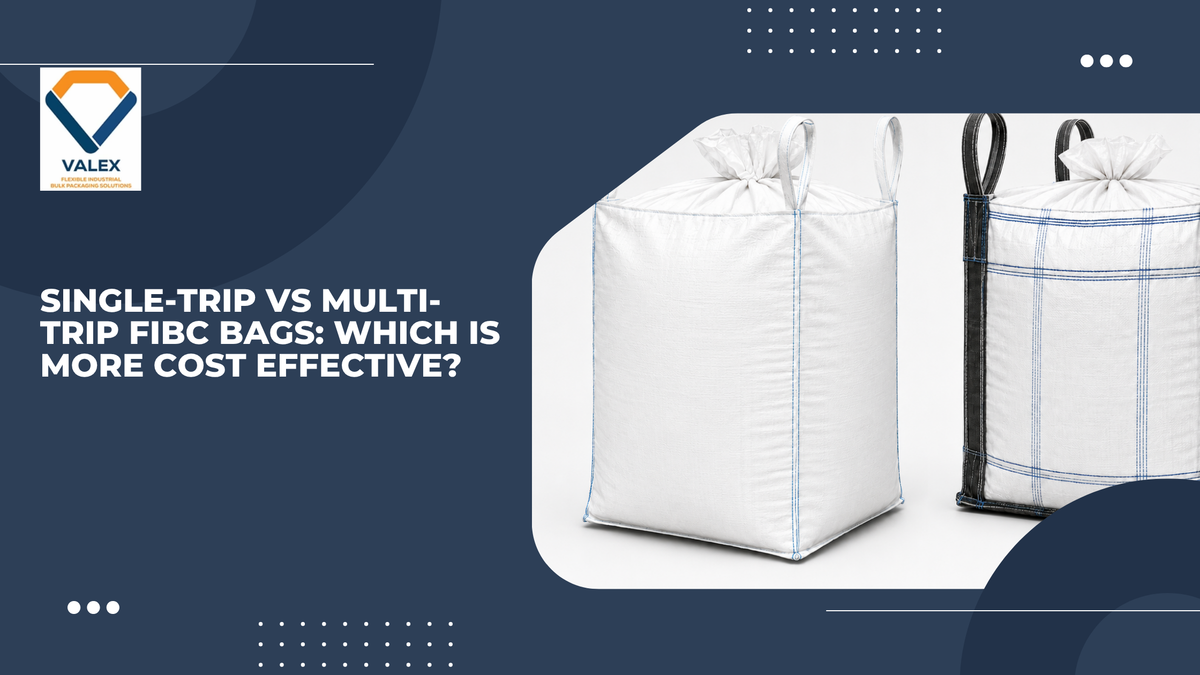
FIBC bags for multi trips tend to be cheaper on a per trip basis when used in a closed-loop supply chain due to reuse of these bags over multiple trips. FIBC bags for single trips tend to be less expensive for export shipping and one-way logistics when return of the bag is not feasible.
To determine the nuances of bulk bag cost comparison, we must examine their cost beyond just their initial purchase price. The selected bulk bag will have a significant effect on your bottom line and the environment, whether you are transporting chemicals, building materials, or food items.
What Are Single-Trip FIBC Bags?
Single-trip FIBCs, also known as one-trip jumbo bags, are designed for a single use only - from the point of filling to final delivery at the destination. They are built with a Safety Factor (SF) of 5:1, which means that the FIBC is designed to withstand up to 5 times its rated Safe Working Load (SWL).
For many businesses, the appeal of single trip vs multi trip FIBC bags lies in the lower upfront cost, because they are typically less expensive at the point of purchase. Since the single-trip bags are not intended for multiple uses, they will often use lighter-weight polypropylene material, making them an economical alternative for shipment to countries where the bag will not be returned to the shipper.
Choosing between single-trip and multi-trip FIBC bags depends on your product, logistics model, and budget. Valex Ventures offers customised FIBC solutions, including one-way bulk bags, reusable FIBC bags, food-grade containers, and specialised industrial packaging. Contact our team to find the most cost-effective bulk bag solution for your supply chain.
The Case for Multi-Trip (Reusable) Bulk Bags
On the opposite end of the spectrum are multi-use FIBC bags, which are also called reusable bulk bags. Reusable bulk bags are heavy-duty containers designed to withstand more than one cycle of use. To ensure safety and longevity, reusable bulk bags are manufactured with a Safety Factor of 6:1.
One of the greatest benefits of reusable bulk bags is that they last longer than traditional poly weave bags. By purchasing a better quality product, businesses should be able to reduce the total amount they spend on a new FIBC in any given year. By using more durable materials - this is referred to as "material efficiency" - we can reduce how much polymer is used each year and positively impact operational costs as well as the environment.
Single Trip vs Multi Trip FIBC Bags: The Cost Comparison
To conduct an accurate bulk bag cost comparison, we must evaluate the "Cost Per Trip."
-
Purchase Price: A single-trip bag is much cheaper at the point of purchase compared to a multi-use FIBC bag that is designed to last for a minimum of 5 to 10 trips. The lifespan will depend on the type of product and the way it has been handled.
-
Administrative Costs: Keeping track of a fleet of reusable bags means there will be a need for a system to track each bag, along with determining when bags need to be cleaned and/or inspected for safety. The cost of cleaning a bag that has been used to store food or hazardous chemicals can be very high. By using bags with a removable liner, businesses can prolong the life of an FIBC and eliminate the costs associated with cleaning.
-
Disposal and Waste: With the increased use of the UK's Plastic Packaging Tax and landfill fees, there is now also a hidden cost associated with disposing of one-trip jumbo bags. Environmental guidelines encourage transitioning to reusable systems in an effort to reduce the use of single-use plastic products.
At a Glance: Comparison Table
|
Feature |
Single-Trip (One-Trip) |
Multi-Trip (Reusable) |
|
Safety Factor |
5:1 |
6:1 |
|
Upfront Cost |
Lower |
Higher |
|
Durability |
Low (single journey) |
High (multiple cycles) |
|
Sustainability |
Higher waste |
Circular economy |
|
Best For |
Exports, remote sites |
Closed-loop logistics |
When to Choose Which?
The decision of single trip vs multi trip FIBC bags often boils down to your supply chain structure.
1. One Trip FIBCs - If you are exporting goods internationally and will not receive the FIBCs back once they reach their destination, then you should be using one-trip jumbo bags. You cannot save money by sending a high-value reusable bag to a destination and then never getting it back, as it will not create any savings.
2. Multi-Trip FIBCs - If you are using a closed-loop supply chain system, i.e., if you are moving raw materials from one of your UK factories to another one of your UK factories, then you should be using reusable bulk bags as they are considerably more cost-effective than one-trip bulk bags. Over the course of six months, the total cost of one reusable bulk bag is considerably less than purchasing ten one-trip bulk bags.
Environmental Stewardship and Material Efficiency
When it comes to sustainability, the production of materials accounts for about 25% of CO2 emissions worldwide. When businesses switch over to using multiple-use FIBC bags, they are helping support the circular economy by decreasing the amount of synthetic plastic materials entering the environment.
Valex Ventures is committed to using only recyclable polypropylene when producing FIBCs (Flexible Intermediate Bulk Containers) and to using less harmful materials wherever possible so as not to compromise the strength or safety of the FIBCs. Learn more about our recyclable materials and sustainable packaging approach, and how it can support your business's sustainability goals.
Final Thoughts
There is no winning choice in the single trip vs multi trip FIBC bags debate because each option may suit a different type of business or logistics strategy. A linear logistics strategy may lead you to choose a single-use bag due to the flexibility of pricing. If your facility can handle returning and reusing packaging, then reusable bulk bags will likely save you money per trip and reduce the negative impact on the environment.
The key to a successful bulk bag cost comparison is to include the cost of disposal (hidden cost), tax savings as a result of reusing the packaging, and how durable the bulk bag will be over time.
For specific logistics solutions tailored for your company's needs, please do not hesitate to contact our expert team.
Frequently Asked Questions (FAQs)
1. What is the difference between a 5:1 and 6:1 FIBC safety factor?
For example, a 5:1 “single-trip” bag will hold five times its rated capacity. However, a 6:1 bag is made to hold six times that amount, indicating that it can withstand more uses than a 5:1 bag. It is also built of thicker fabric and reinforced seams than a 5:1 bag, enabling it to endure multiple uses.
2. Are multi-trip FIBC bags cheaper in the long run?
Yes, if you have a closed-loop supply chain. You will save money over the life of a multi-trip FIBC than if you purchased one-time use bags for each use. The savings will come from the lower cost per use of a reusable bag vs the higher purchase cost of a one-time use bag.
3. Can all FIBC bags be reused?
No, single-use (5:1) FIBCs are designed for use only once and could potentially cause accidents if reused. Conversely, 6:1 multi-purpose FIBCs are designed to be reused.
4. How do you inspect reusable FIBC bags before reuse?
Before reusing a multi-trip FIBC, inspect and test for damage from previous use to ensure that it is still safe to use. Depending on the product being shipped, its condition, and how carefully it is handled, a multi-trip FIBC can generally be used between 5 and 30 times.
5. What industries commonly use multi-trip FIBC bags?
The major industrial users of FIBCs are companies that manufacture products such as chemicals, building materials and food. These industries benefit greatly from the environmental and cost benefits of using multi-trip FIBCs and from closed-loop supply chains, where raw materials are moved between production sites.
6. Are polypropylene FIBC bags recyclable?
Yes, FIBCs made from polypropylene can be recycled. Many manufacturers of FIBCs (like Valex Ventures) use recyclable polypropylene in their FIBCs, which further contributes to the circular economy and helps reduce the amount of virgin material that ends up in landfills.


