

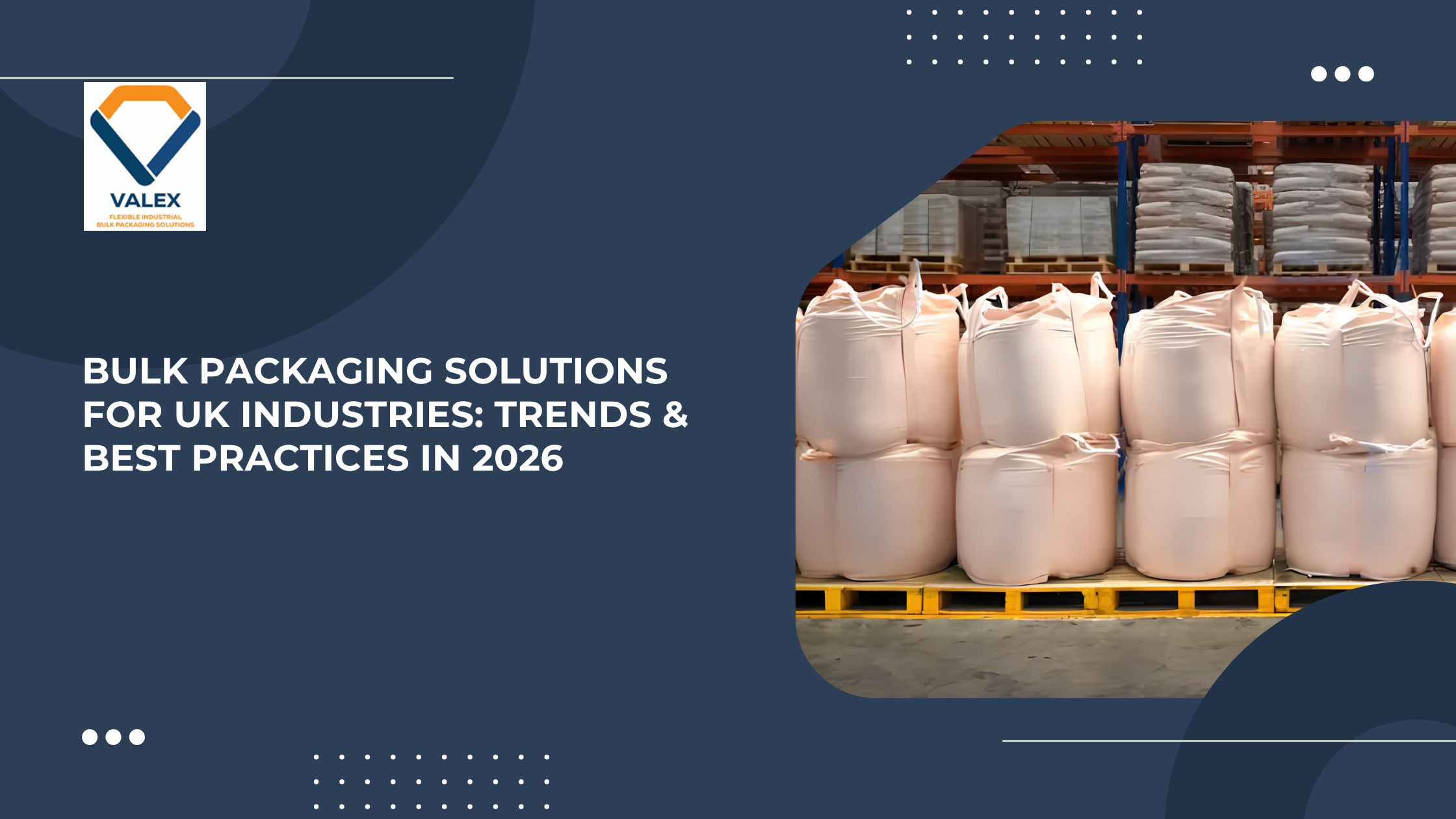
Every year, a lot of raw and finished goods are transported by UK manufacturers. The majority of bulk transport relies on reliable bulk packaging. The UK packaging industry is estimated to be valued at approximately USD 26.58 billion by 2026, so there is a lot of responsibility associated with packing materials for UK manufacturers; therefore, understanding bulk packaging processes for manufacturing may help you make the right decisions when determining how to pack and ship bulk materials to reduce costs, compliance concerns, and maintain integrity with your customers.
In this guide, we provide a look at what direction the industry is headed by 2026, as well as some best practices being employed by UK manufacturers to mitigate the increasing costs of manufacturing, assemble their supplies more quickly and comply with the regulatory requirements placed upon them.
Why Bulk Packaging Decisions Matter More in 2026
Overall, the increasing pressure from escalating material prices for manufactured goods, along with rising freight rates and tighter regulatory pressures, has raised the significance of making appropriate decisions regarding how to package bulk materials for transporting products through the supply chain so much so that they are now at the forefront of boardroom discussion. Making poor choices about bulk packaging solutions can lead to damaged products, wasted warehouse space due to poor stacking of bulk materials, increased shipping expenses due to poor loading techniques used to transport bulk materials, and non-compliance issues; whereas making sound decisions allows companies to protect profit margins and allow for smooth operating conditions.
Trend 1: Sustainability and Regulation Are Reshaping Packaging Choices
The discussion around sustainability, within manufacturing and packaging, has moved to centre stage. As of April 1, 2026, the UK Plastic Packaging Tax was increased to £228.82 per tonne for plastic packaging without 30% recycled material. That’s the UK Government providing direct financial motivation to manufacturers to rethink what materials to use in their packaging, with recyclability of materials, such as polypropylene, and the amount of recycled material being included wherever possible in the specification.
Manufacturers who want to respond to the changes associated with sustainability are now leaning toward using bulk packaging solutions manufactured from recyclable materials, rather than waiting until tax legislation changes take effect to make changes to their existing packaging. We will have more details about that in our article on reducing the amount of bulk packaging waste and improving ESG compliance.
Trend 2: Automation and Smarter Forecasting
The second major trend impacting manufacturers in the UK is the introduction of automation and more sophisticated forecasting. Through the use of automation, the way manufacturers currently forecast their packaging requirements is changing as well. As reported by analysts of the manufacturing sector, improved forecasting allows manufacturers to reduce the amount of excess stock and waste when they do their forecasting, resulting in the ability of manufacturers to automate material handling and, therefore, reduce their labour reliance in warehouses where the labour pool has contracted.
The result of these two trends is that we are observing more manufacturers ordering wholesale packaging in a planned batch based on anticipating demand for their products, rather than purchasing bulk packaging in reaction to demand for their products. Consequently, using planned order methods provides businesses with more predictable costs.
Trend 3: Demand for Certified, Sector-Specific Industrial Packaging
Generic bags are being replaced by certified packaging solutions that can be used in specific applications. Examples include food and pharmaceutical manufacturers requesting that industrial packaging receive BRCGS certification for food safety and chemicals and mining companies looking for UN certification in packaging to handle hazardous materials. Construction companies are looking for rugged, durable bulk builder bags – packaging that will endure the elements on a job site.
See the many different ways these needs permeate each Industry on the industries page, where you can compare the packaging needs of the construction, agricultural, chemical, food, and mining Industries.
Best Practices for Choosing Packaging Suppliers in 2026
As compliance and costs get tighter, the way you choose your packaging suppliers UK will affect what you buy and how much it costs. Some approaches are common to businesses successfully making these decisions.
Firstly, buy from packaging manufacturers who are deemed compliant by UK regulatory bodies - complete with certified processes and verified materials. Secondly, where possible, purchase from packaging suppliers in bulk - ordering wholesale packaging (rather than small, ad hoc orders) usually results in a lower price per unit and less chance of experiencing sudden price increases.
Thirdly, if your product has specific handling, sanitary, or hazardous requirements, you should not accept the standard bag solution; instead, you should purchase custom-designed bulk packaging to meet your exact filling, unloading, and stacking requirements, as the savings you realise in reduced waste and fewer handling issues generally outweigh the cost of custom bags.
How Valex Ventures Supports UK Businesses
FIBC bulk bag manufacture is carried out by Valex Ventures in the UK for construction, agriculture, chemical, food and mining businesses using sustainable, recyclable and export-ready finished goods.
If the bulk bags you currently use do not fit properly in your filling line or on your pallets, or they do not meet your specific hygiene requirements, you can specify via our custom design page exactly what you require for your bulk bags, including size and lifting configuration.
Bottom Line
Three forces will shape bulk packaging in 2026: tighter sustainability laws, more intelligent automated forecasting, and increasing demand for "certified" and/or "sector-specific" bulk packaging solutions. UK businesses that make bulk packaging a strategic purchase rather than an afterthought will be in the strongest position to protect their margins and remain compliant.
If you would like to assess your current bulk-bag supply chain, get in touch with Valex Ventures for a tailored recommendation
Frequently Asked Questions
1. What counts as bulk packaging?
Bulk packaging refers to large containers (usually FIBCs) that are used for shipping and storing goods in volumes greater than retail packaging; usually a few hundred kilograms to two tonnes.
2. How has the Plastic Packaging Tax affected industrial packaging costs?
As of April 2026, UK law charges £228.82 per tonne on plastic packaging that contains less than 30% recycled content. Consequently, this has encouraged many companies to use recyclable polypropylene bulk bags, which do not have this additional cost.
3. Is buying wholesale packaging actually cheaper long term?
Usually yes, as long as you have accurate forecasts for demand. Pre-purchasing items in advance (i.e. bulk) lowers your per-unit price, and also gives you protection against short notice price increases; however, it does require you to have sufficient storage space.
4. What should I look for in packaging suppliers UK manufacturers can trust?
You should look for reputable certifications such as BRCGS or UN-testing if applicable, sources of recyclable material, and suppliers who can support custom designs based on your specific fill and discharge requirements and your specific industry sector.
5. Can Valex Ventures supply both standard and custom bulk packaging?
Yes. Valex Ventures provides both standard FIBC bulk bags for immediate purchasing and fully custom-designed bulk bags based on individual fill and discharge specifications and your industry sector.


