

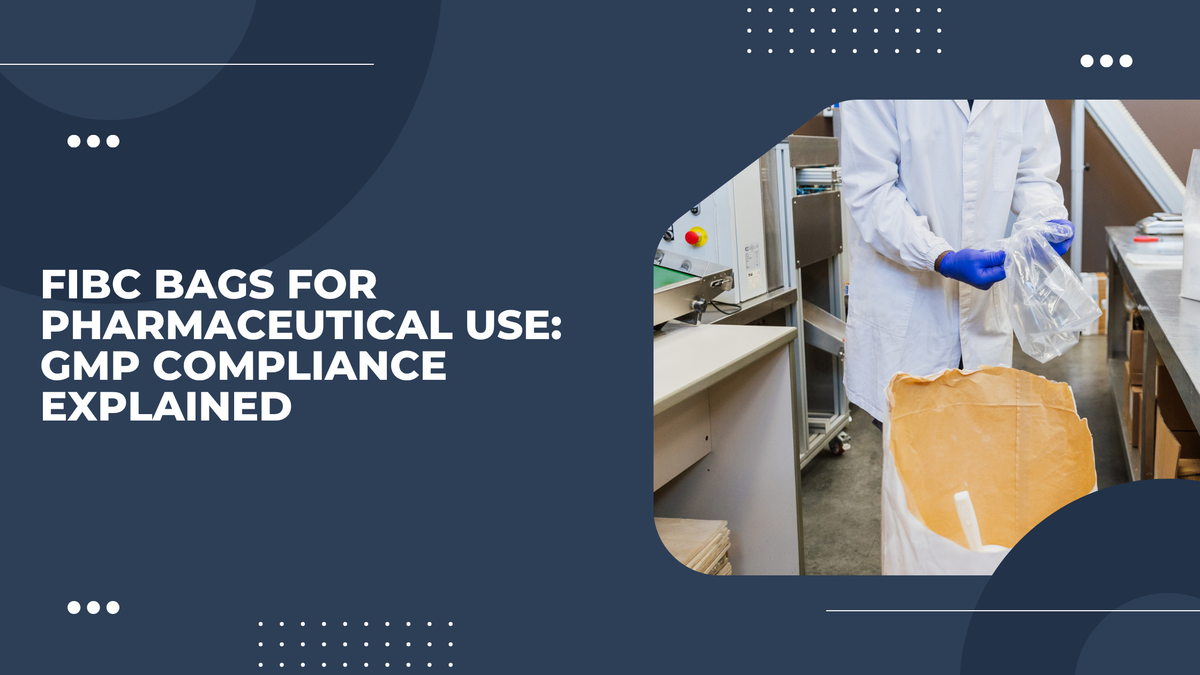
The supply chain must be untainted in pharmaceutical manufacturing. In this regard, packaging used to transport large volumes of active pharmaceutical ingredients (APIs) or excipients is not merely a logistical factor but a crucial quality-control aspect. Not all bulk bags are the same; however, Pharmaceutical FIBC bags (Flexible Intermediate Bulk Containers) are the most common choice in the industry for transporting dry bulk solids.
To maintain the rigorous standards required by regulatory bodies like the MHRA in the UK or the FDA globally, manufacturers must utilise GMP-compliant bulk bags. This guide explains what makes an FIBC pharma-grade and why GMP compliance is critical for UK manufacturers.
Understanding the Role of Pharmaceutical FIBC Bags
Standard industrial FIBCs are made to be strong and durable. However, pharmaceutical FIBC bags must be several steps ahead. They are designed to block any form of contamination, be it biological, chemical, or physical, from coming into contact with the sensitive substances inside the bags.
These bags are commonly used for;
-
Raw material and API Transportation.
-
Holding intermediate pharmaceutical products
-
Bulk-distribution handling of finished solid-dose medicines before the final packaging.
Because these materials will eventually be ingested by or administered to patients, the pharma-grade FIBC bags used must be produced in a highly controlled environment.
What is GMP Compliance in FIBC Manufacturing?
Good Manufacturing Practice (GMP) is the aspect of quality assurance that mandates that products are consistently produced and controlled according to quality standards. For the pharmaceutical FIBC bags, GMP compliance specifically pertains to the manufacturing environment of the bags, the raw materials used, and the traceability of the final product.
1. Cleanroom Production
The manufacturing of the hygienic bulk packaging for the pharma sector must take place in a certified “Cleanroom”, unlike standard bags. Such facilities (typically ISO Class 7 or 8) regulate airborne particle concentrations.
-
Air Filtration: HEPA filters ensure that dust and microbes are minimised.
-
Pest Control: Stringent protocols concerning insect or rodent access.
-
Personnel Hygiene: Workers must wear hairnets, gloves, and specialised suits to avoid human contamination.
To find out more about the hygiene and safety standards we uphold in our manufacturing process, visit our Hygiene & Safety page.
2. Material Safety and Migration
The polymers used to weave pharmaceutical FIBC bags must be virgin polypropylene. Recycled materials are completely prohibited owing to the risk of leaching unknown chemicals. Furthermore, any liners used must be food-grade and pharmacopoeia-approved to ensure that there is no chemical migration between the plastic and the product.
3. Vacuuming and Metal Detection
This is a critical process step in the production of GMP-compliant bulk bags.
Every bag undergoes the following:
-
Air Wash/Vacuuming: Removal of loose threads, “birds’ nests,” or poly-pellets.
-
Light Table Inspection: Using a light table to detect any tears in the weave or foreign materials in the bulk bags.
-
Metal detection: to ensure no needle fragments or micro-metallic debris from the sewing process remain.
Key Features of Pharma Grade FIBC Bags
When purchasing pharmaceutical packaging bags, there are certain technical features to look for that ensure maximum safety:
-
Ultrasonic Cutting: This cuts out the possibility of fraying of the fabric and ensures that no stray fibres contaminate the powder.
-
Sift-Proof Seams: Necessary for sift-proofing the fine powders to prevent leakage and shield the outside environment.
-
Anti-Static Properties: Most pharmaceutical powders are combustible. It is crucial to use Type C (groundable) or Type D (static dissipative) bags for ATEX-regulated zones.
-
Traceability: Each bag should have unique tracking numbers so that the manufacturer can trace the batch, identify which raw materials it came from, and tie it to a certain manufacturing shift.
The Importance of Hygienic Bulk Packaging
The transition to hygienic bulk packaging is often prompted by the desire to reduce wastage and improve efficiency without compromising safety. It is possible to transport a maximum of 2,000kg in one pharmaceutical FIBC bag, compared with dozens of smaller drums or sacks, resulting in a reduction in the total number of “touchpoints” for potential contamination.
At Valex Ventures, our manufacturing processes are built around these standards see our Hygiene & Safety documentation for full details.
Compliance and Certification Sources
When working to ensure that your supply chain adheres to both UK & international regulations, consult the following organisations as your authority:
-
ISO 14644-1: The globally approved standards provide guidelines for cleanrooms as well as controlled environments that are associated with the cleanroom.
-
European Pharmacopoeia (PhEur): This standard is focused on the specifications to consider when using plastic containers/closures for pharmaceutical use.
-
BRCGS (British Retail Consortium Global Standards): Many reputable FIBC manufacturers have also attained BRCGS certification for their packaging materials. As such, BRCGS certification closely aligns with GMP standards for the production of pharmaceutical products.
Final Thoughts
In the pharmaceutical industry, "good enough" does not exist. Purchasing pharmaceutical FIBC bags that have been independently verified through GMP compliance will help protect both the integrity of your pharmaceutical product and your company's reputation. By investing in high-quality and fully compliant pharma-grade FIBC bags, you are ensuring that your materials remain free from contamination throughout the manufacturing process until they reach the patient.
Need GMP-compliant pharmaceutical FIBC bags for your operation? Contact Valex Ventures for cleanroom-manufactured, pharma-grade bulk packaging solutions tailored to UK and international compliance standards.
Frequently Asked Questions (FAQs)
1. Can I reuse pharmaceutical FIBC bags?
Pharma-grade FIBCs are generally single-use to comply with GMP requirements and prevent cross-contamination between batches. Reuse is not recommended regardless of the safety factor rating.
2. What is the difference between food-grade and pharma-grade bags?
Both types of bags are produced under cleanroom conditions, but pharma-grade bags have increased traceability of materials used, stricter metal detection, and generally require 100 per cent physical inspection instead of statistical sampling.
3. Are all GMP-compliant bulk bags anti-static?
While GMP-compliant bulk bags are hygienic, not all bulk bags are considered anti-static, as they are contingent on the nature of the product being filled, as well as the explosive risk from the environment. A dust ignition analysis must always be done.
4. How are liners secured in pharma FIBCs?
Liners are "tabbed" or glued to the outside of the bag to prevent the liner from collapsing inward and being emptied along with the product during discharge — a serious safety concern in pharmaceutical processing.
5. How do I verify a manufacturer's GMP claims?
Request their ISO cleanroom certification, BRCGS audit reports, and “Declaration of Compliance” for food contact materials. Manufacturing sites are also typically visited by the pharmaceutical quality assurance team for physical audits.


